Homesites
Residents
Governed by Austin standards
Public Parks and Open Space
Hays Commons is a proposed 498-acre mixed-use project developed by MileStone Community Builders; Austin’s largest privately held homebuilder.
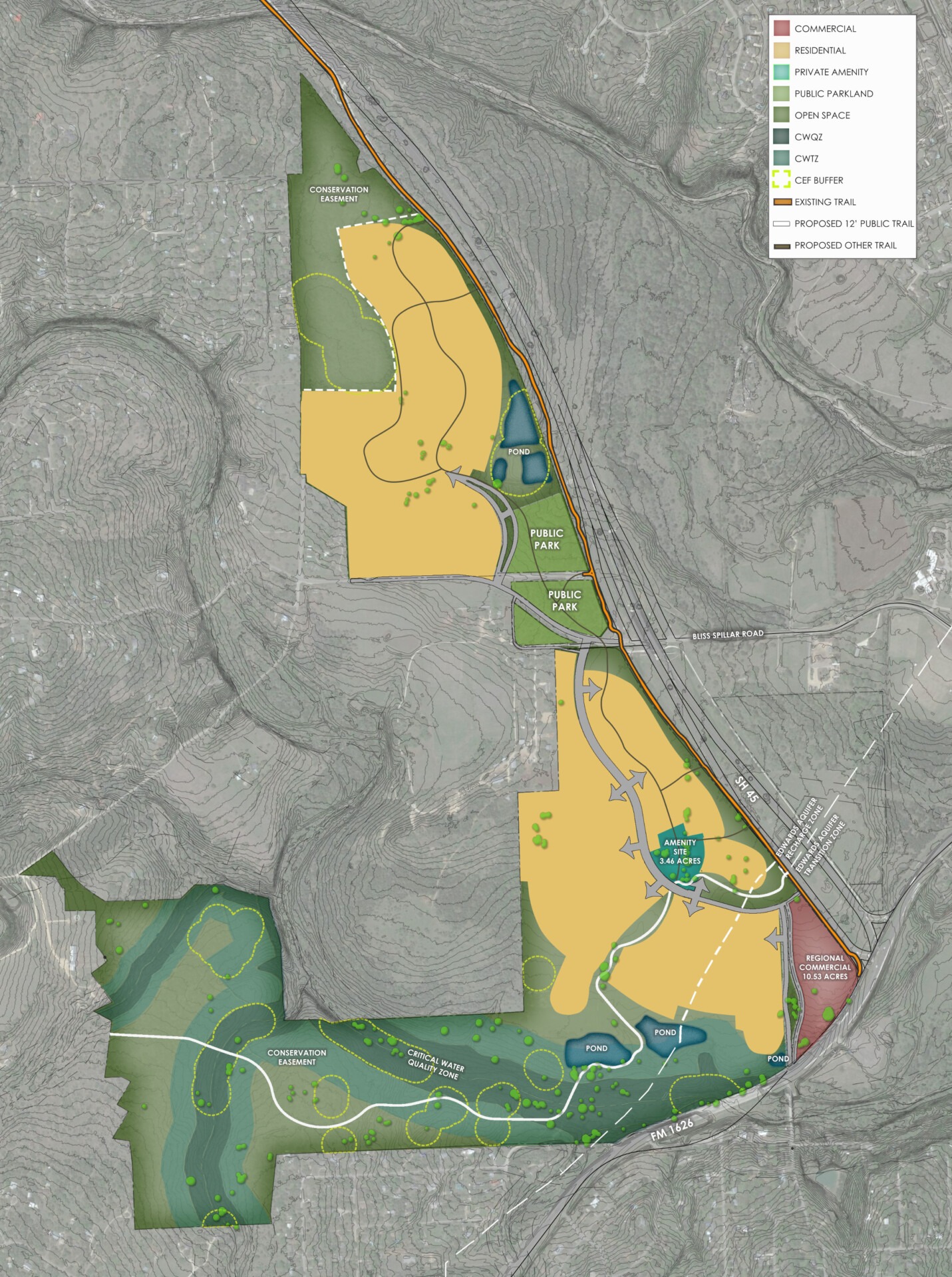
Located at the corner of FM-1626 and SH-45, the project site is in both Travis and Hays counties, with a portion of the land residing in the City of Austin’s Extraterritorial Jurisdiction (ETJ). Once completed, Hays Commons will include approximately 557 residential homesites, approximately 100,000 square feet of commercial development, an amenity center, and vast parks and open spaces.
This live, work, play environment will bring together single family residential homesites, parks and open spaces, community amenities and commercial space that approximately 1,750 residents will call home. The site offers efficient transportation options to SH-45 and FM-1626 and access to Austin and Hays Independent School Districts.
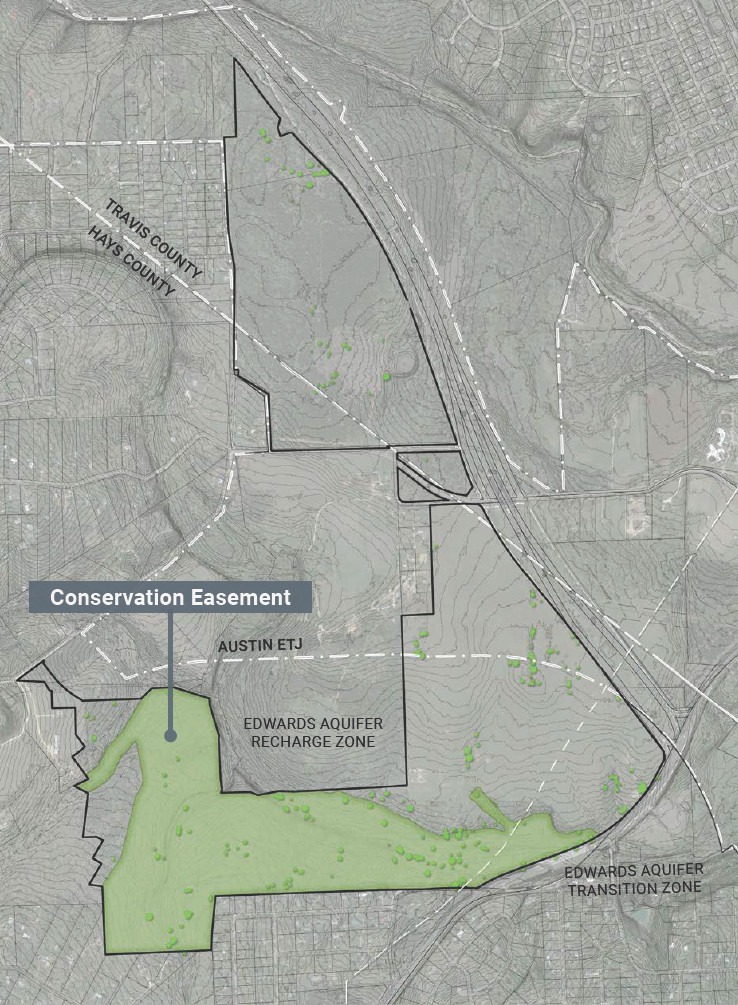
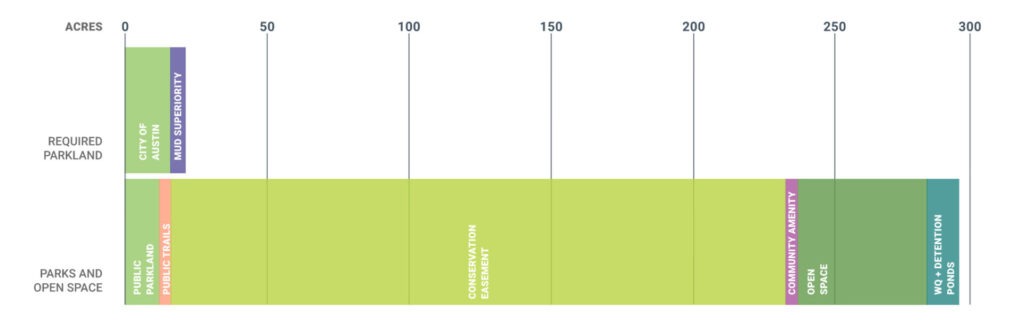
The project will also dedicate 200+ acres of parks and open space at the city’s superiority rate of 10.4 acres per 1,000 residents, a separate conservation easement protecting the Little Bear Creek corridor for generational land preservation, and public multi-use trails connecting to the Highway 45 regional trail.
Hays Commons will deliver much needed housing to a critical growth corridor in Southwest Austin. The project site is uniquely located and has several jurisdictional and regulatory options to pursue for development. In a current environment where developments are actively disannexing and choosing alternative regulatory frameworks, Hays Commons is intentionally pursuing a partnership with the City of Austin to expand jurisdiction and have a meaningful impact on the project’s design and development standards.
Collaboration with the City of Austin is the commonsense outcome that strikes the right balance between residential housing and environmental priorities. In recognizing that, MileStone is actively working with the City in pursuit of Council approval of the project. This partnership would result in the site meeting or exceeding city standards for key development issues embraced by the City.
Under MileStone's most recent submission, a Consent and Development Agreement for the Hays Commons Municipal Utility District would serve as the operative development agreement between MileStone and the city. MileStone would ask the City to expand its ETJ over the full site, including about 51 acres previously released. The City would then bring the full site under Austin's limited-purpose jurisdiction, extending its environmental, zoning, development, and building requirements across the entire site.
The agreement would also set up a separate Strategic Partnership Agreement between the city and the District to determine the timing and terms of full-purpose annexation. Together, the agreements would give Austin regulatory oversight from limited-purpose annexation forward and a negotiated path to future annexation and city revenue.
Thomas Rowlinson, Principal Planner, City of Austin Parks and Recreation Board Meeting on August 26th, 2024
Leslie Lilly, Environmental Conservation Program Manager for Watershed Protection, City of Austin Environmental Commission Meeting on October 2nd, 2024 (11:32)
City consent to expand the existing Hays Commons Municipal Utility District (MUD), already approved by TCEQ, to provide centralized regional water and wastewater services to the site. Consent is not required if the project is out of the City of Austin's ETJ, but consent gives the City the opportunity to pursue its priorities.
Thomas Rowlinson, Principal Planner, City of Austin Parks and Recreation Board Meeting on August 26th, 2024
Commissioner Spencer Schumacher, City of Austin Urban Transportation Commission Meeting on July 9th, 2024 (45:01)
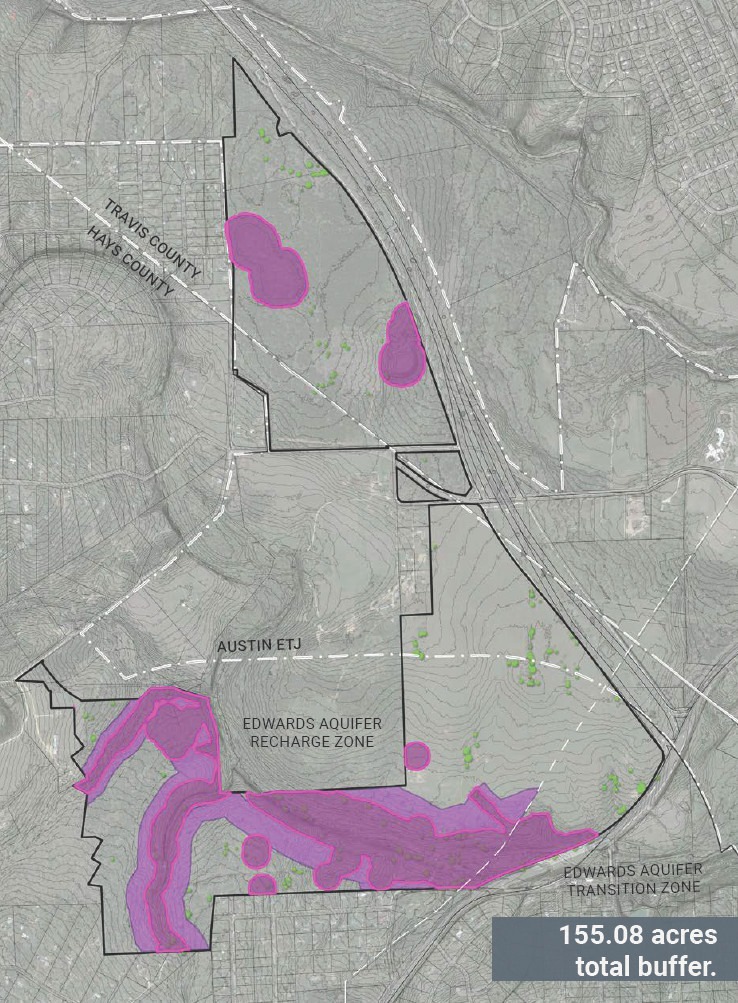
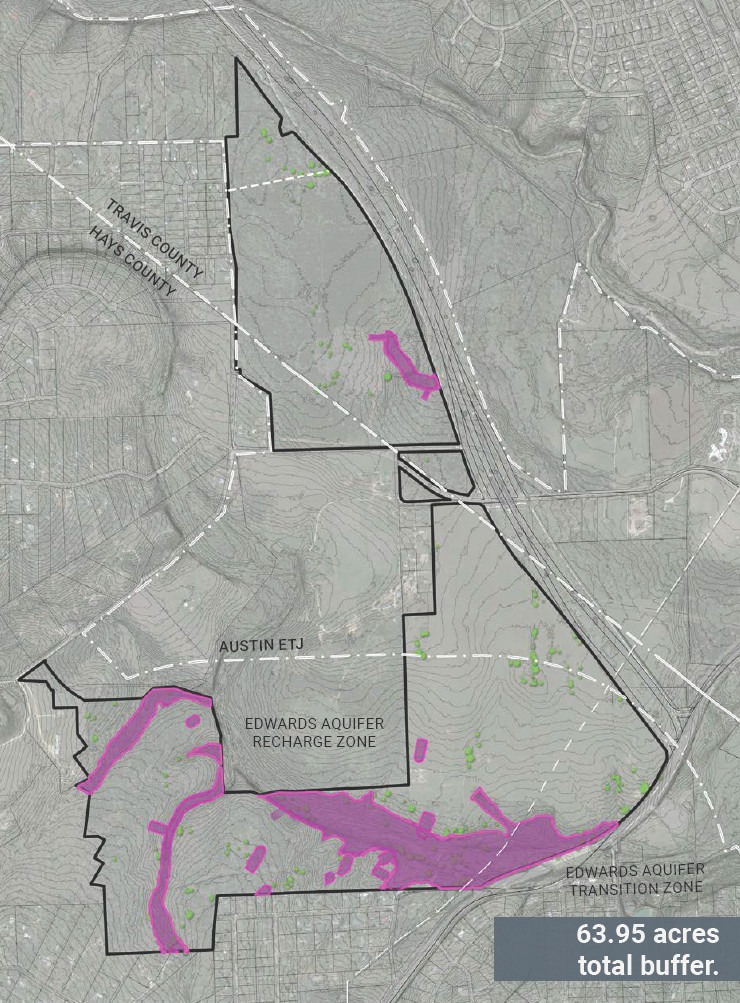
Partnership will retain the recharge zone acreage already in the City of Austin ETJ and bring an additional 292 acres of Edwards Aquifer Recharge Zone into the city's jurisdiction and regulatory purview. Enforcement of SOS water quality standards for pollutant loads and stormwater runoff across the entirety of the property will protect environmental features.
Sara Groff, Principal Planner, City of Austin Urban Transportation Commission Meeting on July 9th, 2024 (34:21)
Sara Groff, City of Austin Urban Transportation Commission Meeting on July 9th, 2024 (35:00)
Funding and construction of external connections to SH-45 and FM-1626, and transportation network and active transportation improvements, including bike lanes, trails and sidewalks constructed in accordance with the applicable City or County transportation criteria.
Publicly accessible parkland and open space dedicated at the City’s superiority rate of 10.4 acres per 1,000 residents, plus a separate conservation easement protecting the Little Bear Creek corridor, with limited public access for recreation and education. Trail network creation that will provide critical connectivity options to the Violet Crown Trail and Onion Creek Trail and future proposed regional trails.
Thomas Rowlinson, Principal Planner, City of Austin Parks and Recreation Board Meeting on August 26th, 2024 (2:09:48)
This vision can only be realized through collaboration with the City of Austin. MileStone has reworked the project in response to City feedback. Key concessions include:
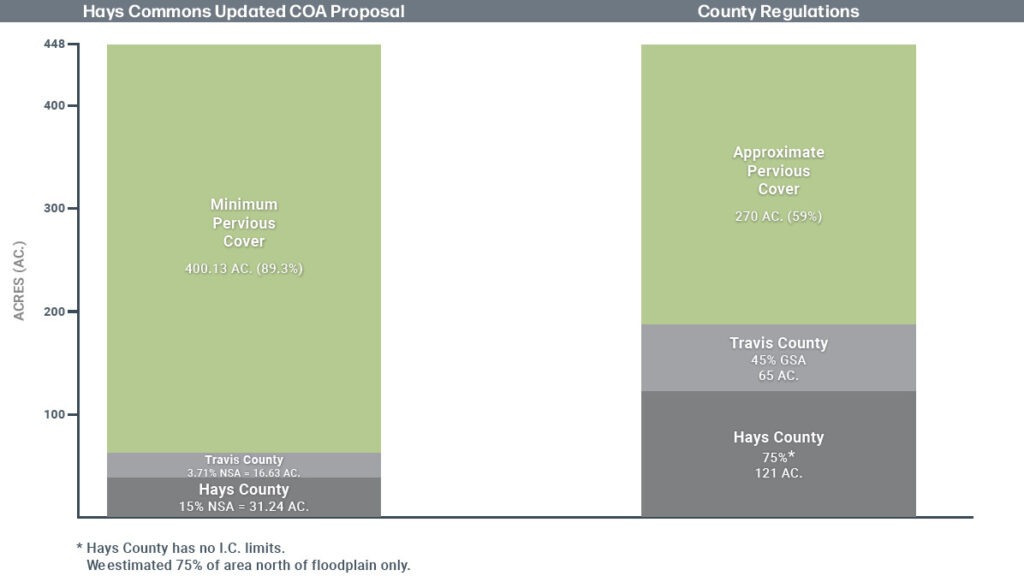
Withdrew the request for a site-specific SOS Ordinance amendment and accepted the 15% impervious cover cap across the approximately 450-acre Edwards Aquifer Recharge Zone portion of the site.
Austin’s SOS impervious cover and water quality standards would reach approximately 292 recharge zone acres currently outside City jurisdiction, with no code modification.
Reduced the project from approximately 700 homesites to 557, a cut of more than 20%.
MileStone made the reduction in response to City feedback as part of its effort to reach an agreement.
Extension of centralized water and wastewater service from the City of Austin, with approximately $31 million in developer participation toward Austin Water infrastructure. MileStone will not seek City cost participation.
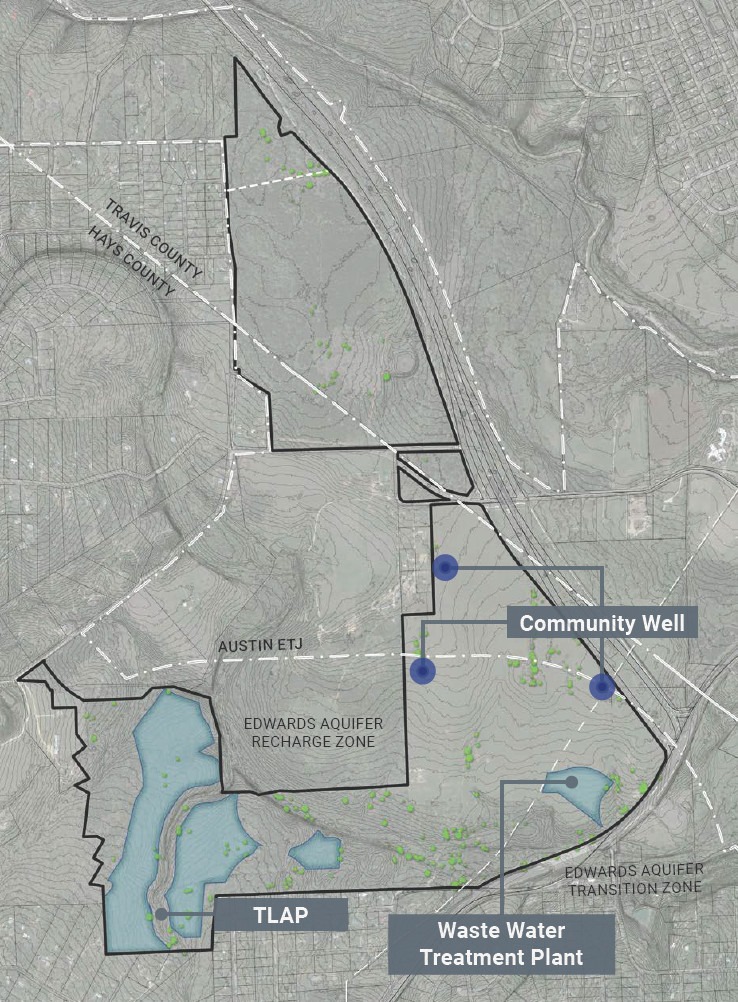
Under this plan, the project would rely on Austin Water service instead of groundwater wells, and on centralized wastewater service instead of the TLAP option or on-site treatment.
Hays Commons will be developed under a partnership with the City of Austin OR via state and county standards. Should the City of Austin elect not to annex the site, Hays Commons will continue through established permitting frameworks with oversight from agencies such as Hays County, Travis County, and the Texas Commission on Environmental Quality (TCEQ).
Hays Commons is pursuing a MUD Consent Application with the City of Austin while also maintaining eligibility to proceed under state and county guidelines. Each development path has defined processes and regulatory considerations that will shape the project’s development.



“The development as currently planned would ignore the City of Austin’s Save Our Springs (SOS) ordinance, which sets strict limits on lot size, impervious cover, and wastewater disposal for development over the Recharge Zone.”
– Save Our Springs Alliance, and Greater Edwards Aquifer Alliance, Press Release on October 19th, 2024
The SOS Ordinance applies only to property within the City of Austin’s jurisdiction. Approximately 342 acres of Hays Commons are outside the City’s jurisdiction, and the remaining 156 acres are eligible for ETJ removal under state law. MileStone is pursuing a MUD Consent Application that would bring the full site under City oversight, extending SOS-related standards through that process.
“Milestone is attempting to establish their own Municipal Utility District (MUD) for the development, in a brazen attempt to skirt the SOS requirements that are part of City of Austin development code.”
– Save Our Springs Alliance, and Greater Edwards Aquifer Alliance, Press Release on October 19th, 2024
The land outside the City of Austin’s jurisdiction is not subject to the SOS Ordinance. Expanding the existing Hays Commons MUD would allow both the Hays and Travis County portions of the site to receive centralized water and wastewater service under City oversight, if approved by City Council. Without City consent, the project would follow county and state regulations for water and wastewater service and environmental protection.
“Establishment of a MUD for Hays Commons would also leave local landowners footing the bill for the development of Hays Commons water and wastewater services.”
– Save Our Springs Alliance, and Greater Edwards Aquifer Alliance, Press Release on October 19th, 2024
Only the developer and residents of the project will pay MUD taxes to recover infrastructure costs necessary to serve the project. If City approved, Hays Commons residents would also become retail customers of Austin Water.
“MileStone seeks to drill its own wells to tap into the Edwards Aquifer, which is currently being managed with drought restrictions, while disposing of treated sewage via land irrigation at the confluence of Little Bear Creek and a tributary.”
– Save Our Springs Alliance, and Greater Edwards Aquifer Alliance, Press Release on October 19th, 2024
While Hays Commons has existing Lower Trinity wells onsite, the project is actively pursuing City of Austin water and wastewater services through a MUD Consent Application. Under this scenario, the project would rely on City of Austin water and wastewater service rather than groundwater wells or a TLAP field.
“The 15% SOS impervious cover requirements, designed to mitigate harmful stormwater runoff to groundwater and Barton Springs, would be ignored in favor of lax 35% impervious cover limits.”
– Save Our Springs Alliance, and Greater Edwards Aquifer Alliance, Press Release on October 19th, 2024
The SOS Ordinance applies to property under City of Austin jurisdiction. MileStone has committed to a 15% impervious cover limit across the approximately 450-acre Edwards Aquifer Recharge Zone portion of the site, consistent with SOS standards, including approximately 292 acres outside the City’s jurisdiction.
“All the sudden Barton Springs instead of being this clear flowing pool would turn into a cloudy polluted pool [because of Hays Commons].”
– Mike Clifford, Technical Director, Greater Edwards Aquifer Alliance, KVUE News on July 16, 2024
This is a scare tactic. The City of Austin partnership proposal relies on centralized wastewater service rather than onsite treatment or a TLAP field. Stormwater management would be designed in accordance with City of Austin water quality and non-degradation standards if the City partnership is approved.
“We feel that it’s very risky to put a TLAP over the recharge zone, unless [TCEQ] can actually quantify what the performance record is of existing TLAPs … We also, too, know that [TLAP permits] turn into de facto discharge permits because treated wastewater continues to be applied onto oversaturated fields at times.”
– Brian Zabcik, Advocacy Director, Save Barton Springs Association, Hays Free Press on July 24th, 2024
TLAP areas must meet strict regulations to avoid this exact concern and are regulated by TCEQ. TCEQ found the Hays Commons TLAP application administratively complete and issued a draft permit. On May 27, 2025, the TCEQ Executive Director determined the permit meets the requirements of applicable law. MileStone would pursue the TLAP option only if the City of Austin MUD consent agreement is not finalized. The City proposal does not include a TLAP system and would rely solely on centralized wastewater service.
497.5 acres.
The project is currently spread across three jurisdictions: City of Austin ETJ, Travis County and Hays County.
The consent agreement will add land to the City of Austin’s jurisdiction rather than remove it, offering environmental protections and conservation measures to the Edwards Aquifer. Additionally, it would prevent the use of groundwater, provide centralized wastewater service in lieu of onsite treatment and land application, provide much needed housing to Southwest Austin and eventually increase the City of Austin’s tax revenue.
The City of Austin defines a Municipal Utility District (MUD) as a special district that operates as an independent, limited government. MUDs offer developers an alternative method to fund infrastructure projects, including water, sewer, drainage, and road systems. Governed by a board elected by property owners within the district, a MUD can issue bonds to reimburse developers for approved infrastructure improvements. The MUD uses property tax revenue and fees from its water and sewer services to repay these debts. As the debt is reduced, more tax revenue can be allocated to additional services.
According to the City of Austin, the extraterritorial jurisdiction (ETJ) refers to the unincorporated land within five miles of the City of Austin’s full purpose city limits that is not part of another city’s limits or ETJ. The City of Austin’s ETJ currently extends into four counties: Williamson, Travis, Hays, and Bastrop.
Under state law effective on September 1, 2023 known as SB 2038, a landowner can elect to remove themselves from a city’s ETJ and a city must allow such ETJ removal. ETJ removal results in only county and TCEQ regulations applying.
The Save Our Springs (SOS) Ordinance is a set of regulations enacted to protect Austin’s water resources, particularly the Barton Springs segment of the Edwards Aquifer.
A Texas Land Application Permit (TLAP) is a wastewater permit issues by the Texas Commission on Environmental Quality (TCEQ). TCEQ requires a TLAP for facilities that dispose of treated wastewater on land through surface irrigation, evaporation, drainfields or subsurface application. The land that receives the wastewater is called the TLAP field.
There will be no change to the neighbor’s jurisdictional status regardless of whether Hays Commons proceeds under a City, County, or State framework.
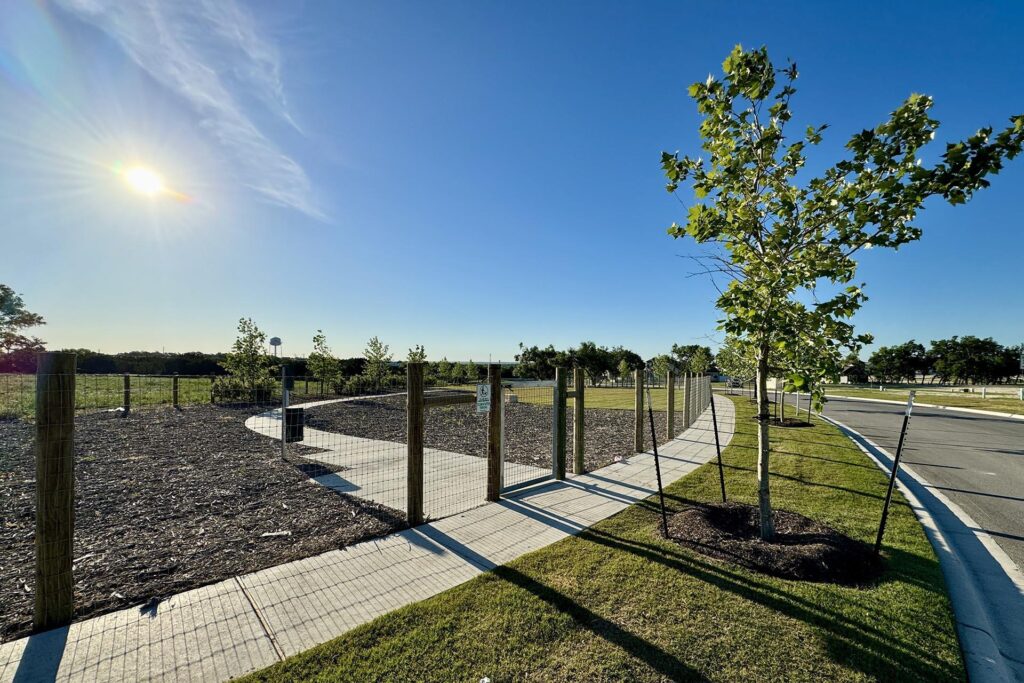
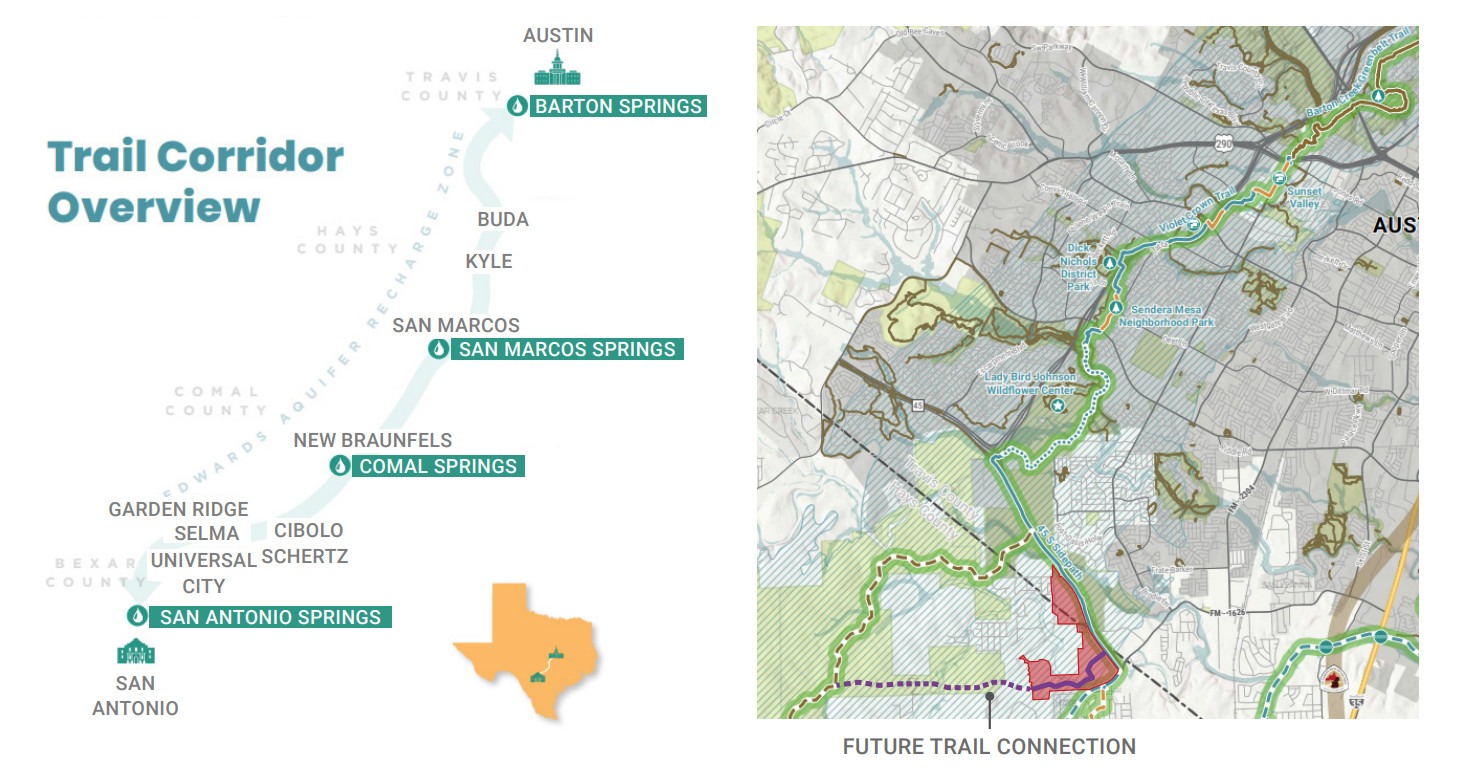
Hays Commons will feature several publicly accessible trails and parks as a City of Austin project. At the heart of the community, there will be parks designed to serve as a recreational hub for the Highway 45 regional trail. This area already includes a parking lot with a trailhead for easy access. Additionally, three miles of public trails will be available to both residents and the public. The new Little Bear Creek trail will connect to the Highway 45 trail and the Violet Crown Trail system, enhancing access to the broader trail network.
MileStone is pursuing two regulatory paths in accordance with Texas law: one through City of Austin and another through county and state guidelines.
MileStone is actively pursuing a MUD Consent Application with the City of Austin.
MileStone applied to the Texas Commission on Environmental Quality (TCEQ) for creation of a MUD, which TCEQ granted on August 1, 2025, and for a TLAP permit.
Municipal Utility District (MUD)
Texas Land Application Permit (TLAP)
No, the MUD Consent Application eliminates the need for dispersing treated wastewater onsite. A TLAP field would only be required if the City of Austin partnership is not approved and would be located more than 2,000 feet away from surrounding neighbors, preventing homes and yards from impact.
No, the MUD Consent Application does not include a wastewater treatment facility or a TLAP field. These would only be necessary if the partnership with the City of Austin is not approved. If the county and state framework are pursued, treatment and disposal systems would follow TCEQ location, design, and setback standards.
We agree. MileStone is pursuing a regulatory framework that supports both housing and environmental priorities. MileStone’s preferred path is City approval of its MUD Consent Application, which would bring the full site under the City of Austin’s limited-purpose jurisdiction and its environmental, zoning, development, and building requirements. The project also remains eligible to proceed under state and county oversight in accordance with Texas law.
Sign up to receive updates on project milestones, public meetings, and permitting activities related to Hays Commons.